
Penalty in Football: Rules, Fouls and How to Take One
A penalty in football is one of the situations that can change the course of a match within just a few seconds. From the location of the foul and how the referee determines the incident to the procedure for taking the 11-meter kick, everything is clearly regulated. Join Mitom TV to learn more about penalty rules, common fouls that lead to penalties, and special situations that often occur on the pitch.
What Is a Penalty in Football?
A penalty, commonly known as a penalty kick or an 11-meter kick, is a direct free kick awarded to the attacking team when an opposing player commits an offense punishable by a direct free kick inside their own penalty area. It is a very clear scoring opportunity because the kicker only has to face the goalkeeper directly from a distance of 11 meters.
When following xem trực tiếp bóng đá, viewers can see that a penalty decision often creates a major turning point. A team under pressure can suddenly have an opportunity to take the lead, while the team that committed the foul faces a very high risk of conceding.

A player prepares to take a penalty from the 11-meter spot
It is important to distinguish that a penalty in football is not the same as a penalty shootout. A penalty kick occurs during normal playing time as a result of a specific foul inside the penalty area, while a penalty shootout is generally used to determine the winner of a knockout match when the two teams remain level after regulation time and extra time.
According to football content shared on Mi Tom TV, understanding this distinction correctly helps viewers avoid confusing a penalty kick during a match with the shootout used to determine the final result after a match.
When Can the Referee Award a Penalty?
Not every collision inside the penalty area results in a penalty. The referee must determine whether the offense falls into the category of actions punishable by a direct free kick while also accurately assessing where the incident occurred.
Fouling an Attacking Player Inside the Penalty Area
One of the most common situations occurs when a defender directly fouls an opponent. Actions such as pushing, pulling a shirt, tripping, kicking an opponent's legs, or making an illegal challenge that prevents the attacking player from playing the ball can lead the referee to point to the 11-meter spot.
The location of the foul is crucial. If the offense occurs outside the penalty area, the attacking team is awarded a direct free kick. If the same type of action occurs inside the defending team's penalty area, a penalty in football may be awarded.
Illegal Handball
Handball is one of the situations that frequently causes debate. The referee does not simply award a penalty whenever the ball touches a player's hand but must also consider the position of the arm, the player's body movement, and the circumstances of the incident.

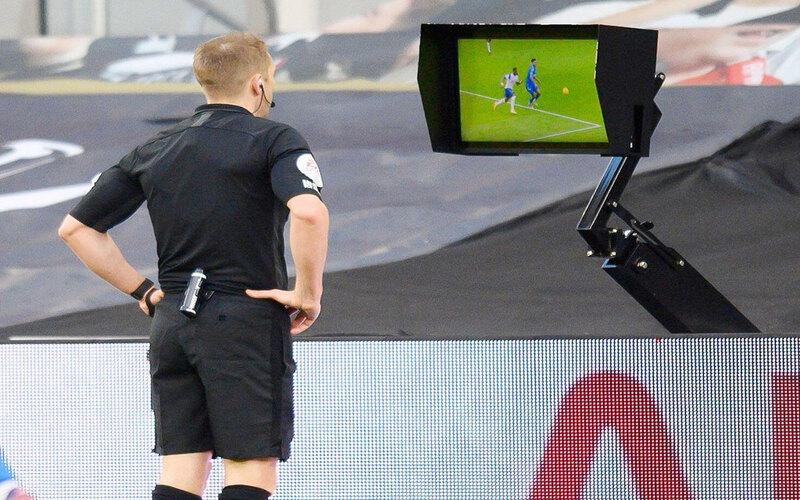
The referee checks VAR after a handball incident inside the penalty area
In many matches, VAR is used to assist the referee in reviewing incidents that are difficult to determine with the naked eye. Those following livescore truc tiep may see the match temporarily stopped while the referee communicates with the VAR team or reviews the monitor on the sidelines.
Pulling or Illegally Blocking an Opponent
Set-piece situations such as corners often involve players pulling shirts, holding opponents, or using their arms to prevent an opponent from moving. If the contact is sufficiently clear and directly affects the attacking player's ability to participate in the play, the referee may award a penalty to the fouled team.
According to Mitom TiVi, these situations can also generate considerable debate because the boundary between a legitimate challenge and a foul can sometimes be very small. Slow-motion replays often help determine the extent of the contact more clearly.
An Illegal Tackle Inside the 16.5-Meter Area
Defenders are allowed to make tackles to stop opponents, but the challenge must be legal. If a player makes contact with an opponent's leg before touching the ball, makes a dangerous challenge, or uses excessive force, the referee may award a foul.
A mistimed tackle inside the penalty area can immediately turn a relatively harmless situation into a scoring opportunity from 11 meters.
The Procedure for Taking a Penalty
Once the referee has determined that a penalty in football should be awarded, play is stopped so that the kick can be taken according to the rules. The ball is placed on the penalty mark, the designated kicker is clearly identified, and the goalkeeper must remain on the goal line in a legal position before the ball is kicked.
The kicker can choose from several finishing techniques, such as striking powerfully toward the upper corner, placing the ball into a lower corner, or waiting for the goalkeeper to move before sending the ball in the opposite direction. Experienced players often focus on both technique and psychology because the pressure in this situation can be enormous.

The goalkeeper faces the penalty taker in a one-on-one situation
The goalkeeper is also allowed to move before the kick is taken but must comply with the positioning requirements on the goal line. If the goalkeeper infringes the rules and the action affects the outcome of the kick, the referee may order the penalty to be retaken depending on the circumstances.
Viewers watching on Mì Tôm Tivi or checking livescore truc tiep will often see the score updated immediately after a penalty is converted. However, play can continue if the goalkeeper saves the kick or the ball rebounds off the post back into play during a penalty taken in normal playing time.

The referee points to the penalty spot after a foul inside the penalty area
How Does a Penalty Affect the Course of a Match?
A penalty can completely change the tactics of both teams. The team that scores from the 11-meter spot may choose to slow the tempo and defend more cautiously, while the team that falls behind is forced to push its players higher up the pitch in search of an equalizer.
Conversely, if the penalty taker misses, the defending team's confidence can receive a significant boost. A goalkeeper's penalty save can even become a turning point that helps the entire team regain confidence and change the course of the match during the remaining minutes.
For this reason, a penalty in football is always one of the situations that attracts considerable attention. It is not only the goal itself that matters; the referee's decision, players' reactions, and the VAR review process can all create memorable moments.
Conclusion
Understanding a penalty in football helps viewers recognize exactly when a referee can award a penalty and how an 11-meter kick is taken. It is a situation that can have a major impact on the result and tactics of a match. Follow Mì Tôm TV to continue discovering more football knowledge, rules, and notable developments.